Power Play: In Conversation with JOHNATHAN JAMES WILLIAM

Photography by

Words by

Art
Fashion
Music

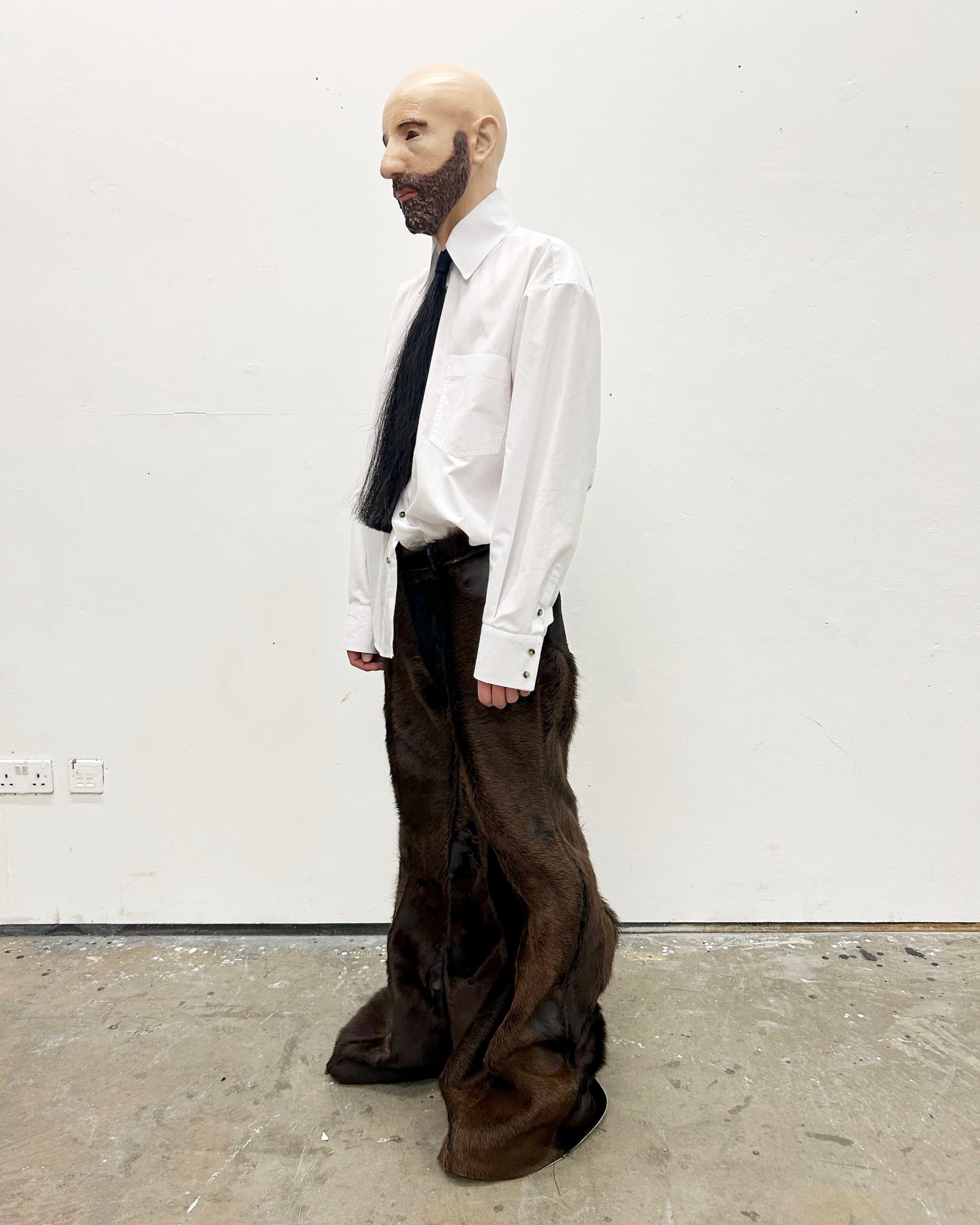
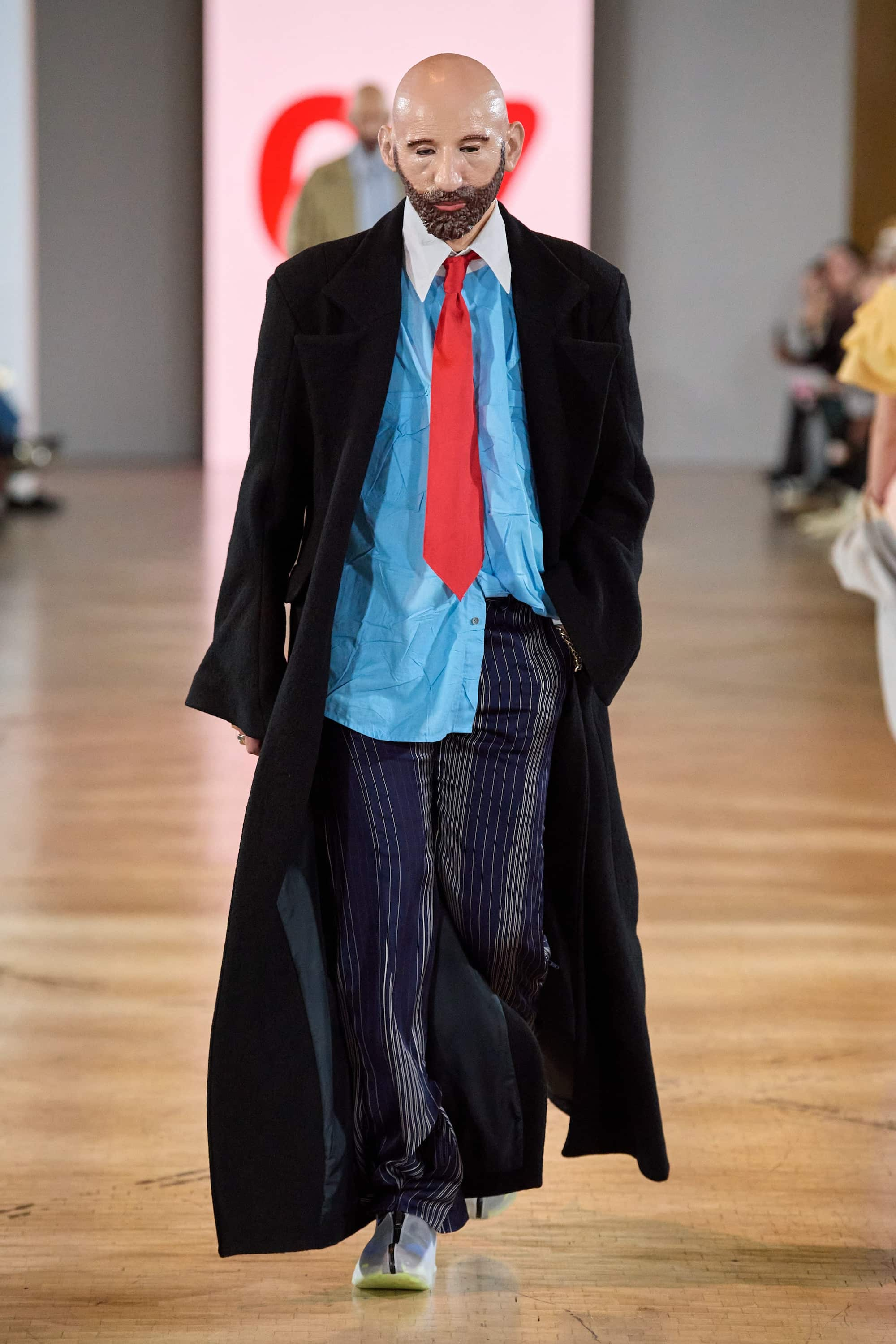
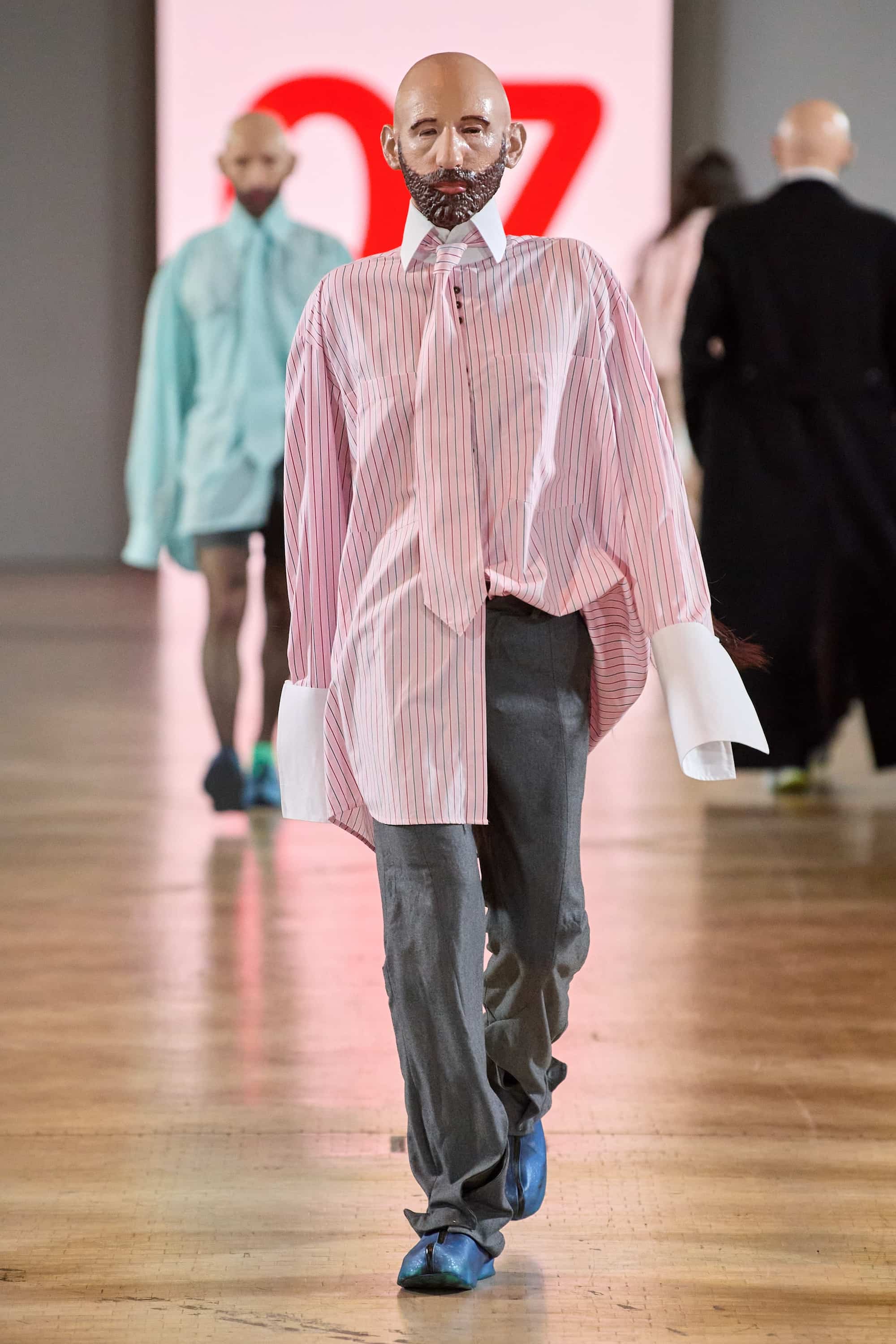
In an industry drunk on nostalgia and novelty, menswear designer Jonathan James William cuts through with something braver—and more incisive. A Central Saint Martins graduate with the instincts of a provocateur-in-the-making, his work exists somewhere between the shady psychodrama of Helmut Lang and the industrial precision of Kiko Kostadinov. Blending BDSM iconography with capitalist dread, his silhouettes sag, stiffen and seduce in equal measure. But beneath the dystopian tailoring and corporate masks lies a more potent inquiry—into masculinity, sexuality, labour and control. Step inside the panopticular world of Jonathan James William, where power dresses up, breaks down, and begs to be seen.
“Social commentary is integral to the world I am building for Jonathan James William. I don’t use it to preach, but more in the sense that fashion should reflect the times we live in.”

I would love to hear the story of your journey towards fashion and design. What inspired you to become a designer, and what continues to inspire your work today? For as long as I can remember I was always a creative child, whether that was making some form of art or designing football kits. Throughout high school that developed into a whole range of different design disciplines, from tattoo artist to architect to automotive designer, then eventually fashion design was the one that stuck. I remember a precise moment when my aunt received the seasonal Louis Vuitton menswear catalogue by accident, and it just happened to be Kim Jones’ debut collection for the house, inspired by African fashion. I was shocked to learn that this is what fashion could be like: very real, desirable clothes. I’ve wanted to do nothing but fashion since. Several themes consistently inspire my work: mundane office life, the underground techno scene, architecture, mid-twentieth century art and furniture, the world of BDSM. I am also very much a visual person, so film continues to inspire a lot of my work too.
You recently graduated from Central Saint Martins’ prestigious MA program in Menswear. How did you find the experience studying there—did it live up to the high standards? It was always my dream to pursue an MA at Central Saint Martins, and for me personally it did more than live up to its high standards. The workload and long hours in the studio from open til close were relentless, but I loved my time there and it definitely helped evolve me into the designer I am today.

“A lot of my work is about men trying to hold themselves together, having composure, being impenetrable. But I’m more interested in when that starts to fall apart.”
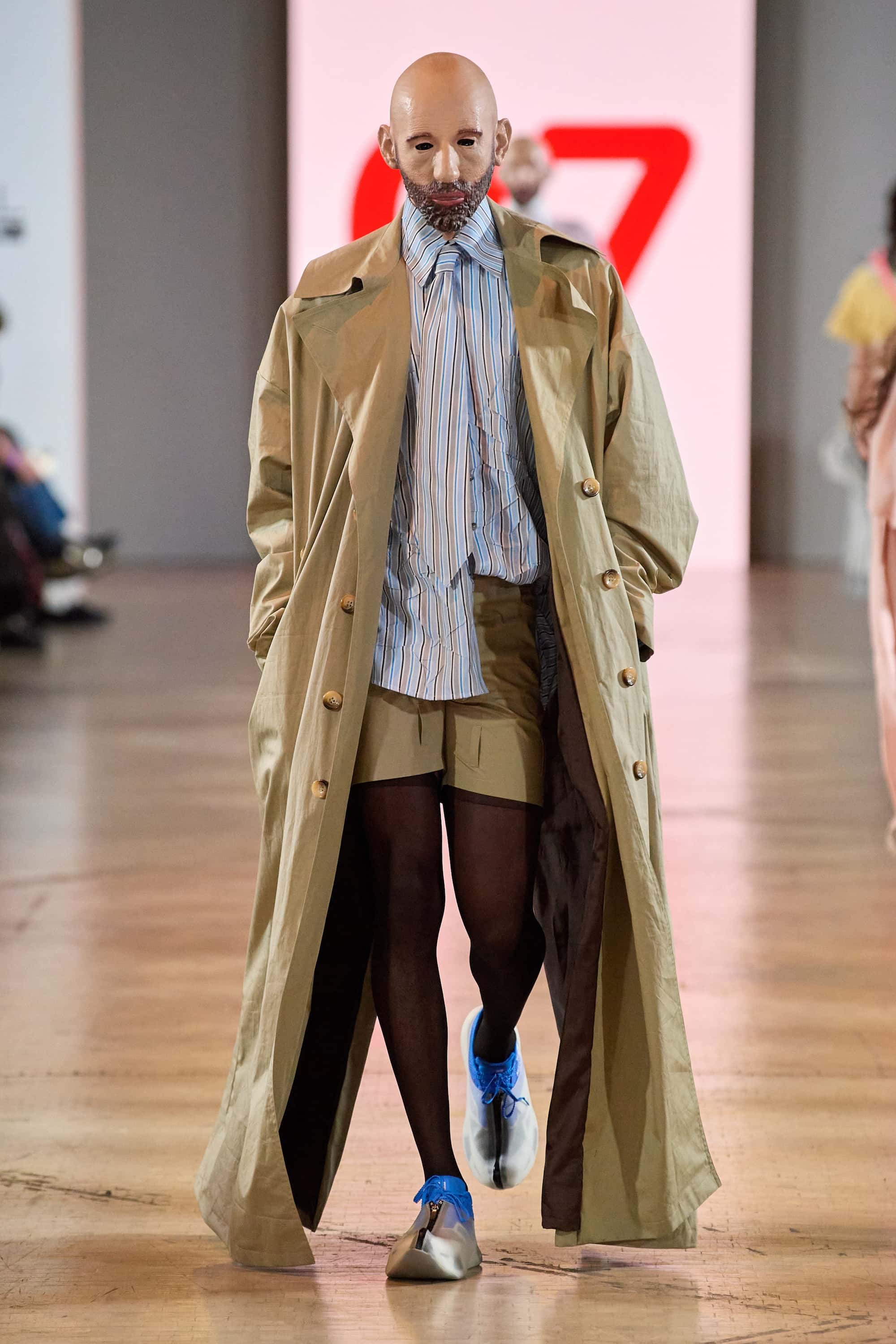
Your label JONATHAN JAMES WILLIAM has emerged as something of a troublemaker in the British fashion landscape. Is social commentary a facet of your work, or what is it that you’re looking to communicate? Social commentary is integral to the world I am building for Jonathan James William. I don’t use it to preach, but more in the sense that fashion should reflect the times we live in. I want to push the viewer to think for themselves and come to their own conclusion regarding my body of work. My MA collection was based around the idea of feeling suffocated—suppressed by your job and by society. I wanted to challenge masculinity and question stereotypical dominance and submission, and ask: What does it mean to dress for power when you’re no longer the one in control?
In terms of inspirations, references to Balenciaga, Martine Rose and even some Kiko Kostadinov come to mind in your work. Are these designers that have inspired your practice? Cristobal Balenciaga I hold to the highest esteem—not purely in aesthetic but in how he saw his work as an ever-evolving continuum. Martine Rose and Kiko Kostadinov are for sure an inspiration, and along with a few other designers based in London, they’re the only ones that excite me. Their determination and work ethic are extremely profound and influential to me not only as a designer, but as a person.

“My work is an evolution from the previous collection—what worked, what didn’t, what needs refining and what should be scrapped.”
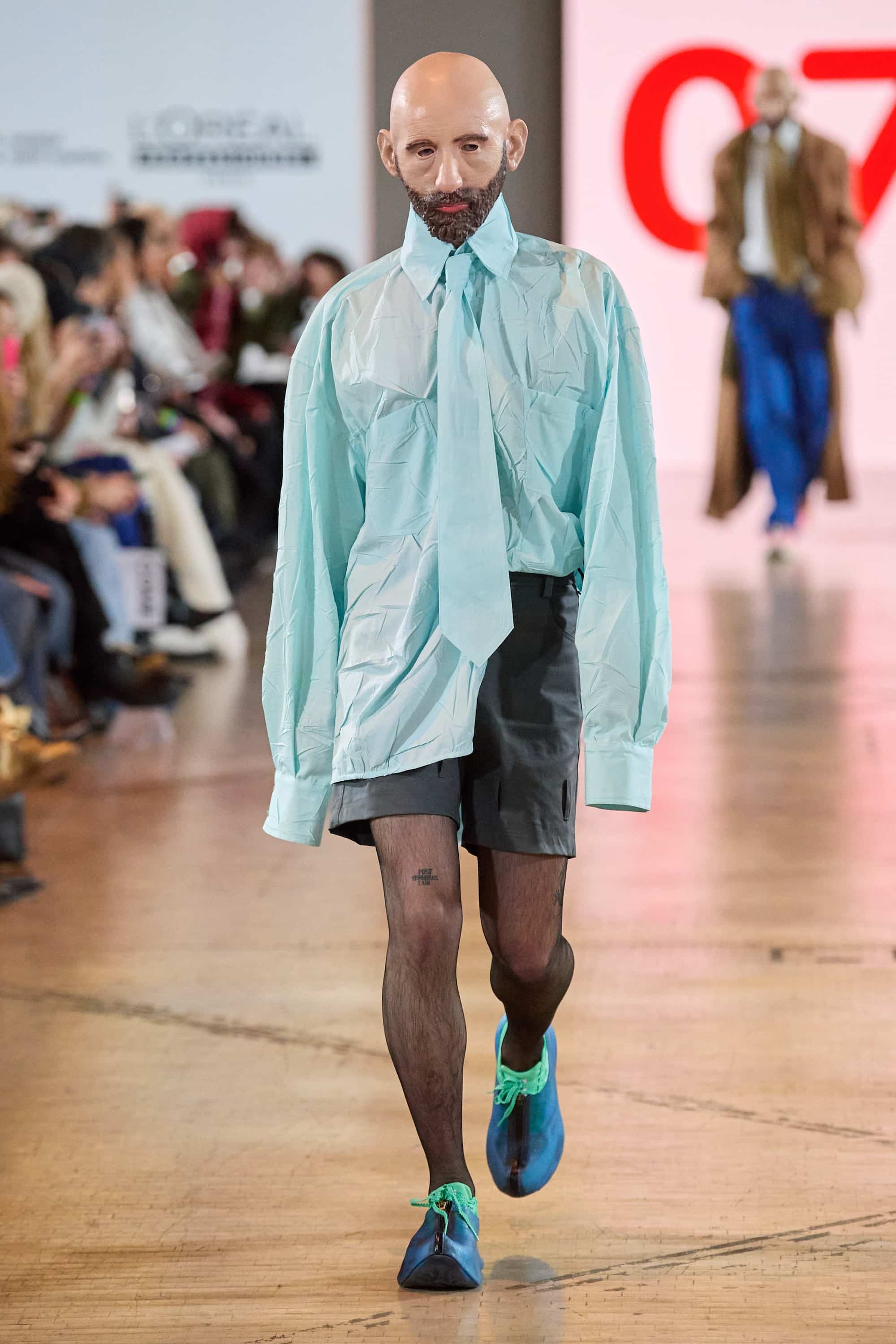
Could you walk us through your design process from conceptualisation to creation? My work is an evolution from the previous collection—what worked, what didn’t, what needs refining and what should be scrapped. This idea stems from my ancestor, Charles Darwin. I’m obsessed with how we as humans have evolved, how animals have evolved, and how clothing will continue to evolve too. My process begins with research, which I organise into folders and files—ironically like working in an office. I prefer a technical, mathematical approach: pattern cutting, making and editing toiles, exploring fabrics and colour stories. Sometimes it takes years for the right idea to find its time.
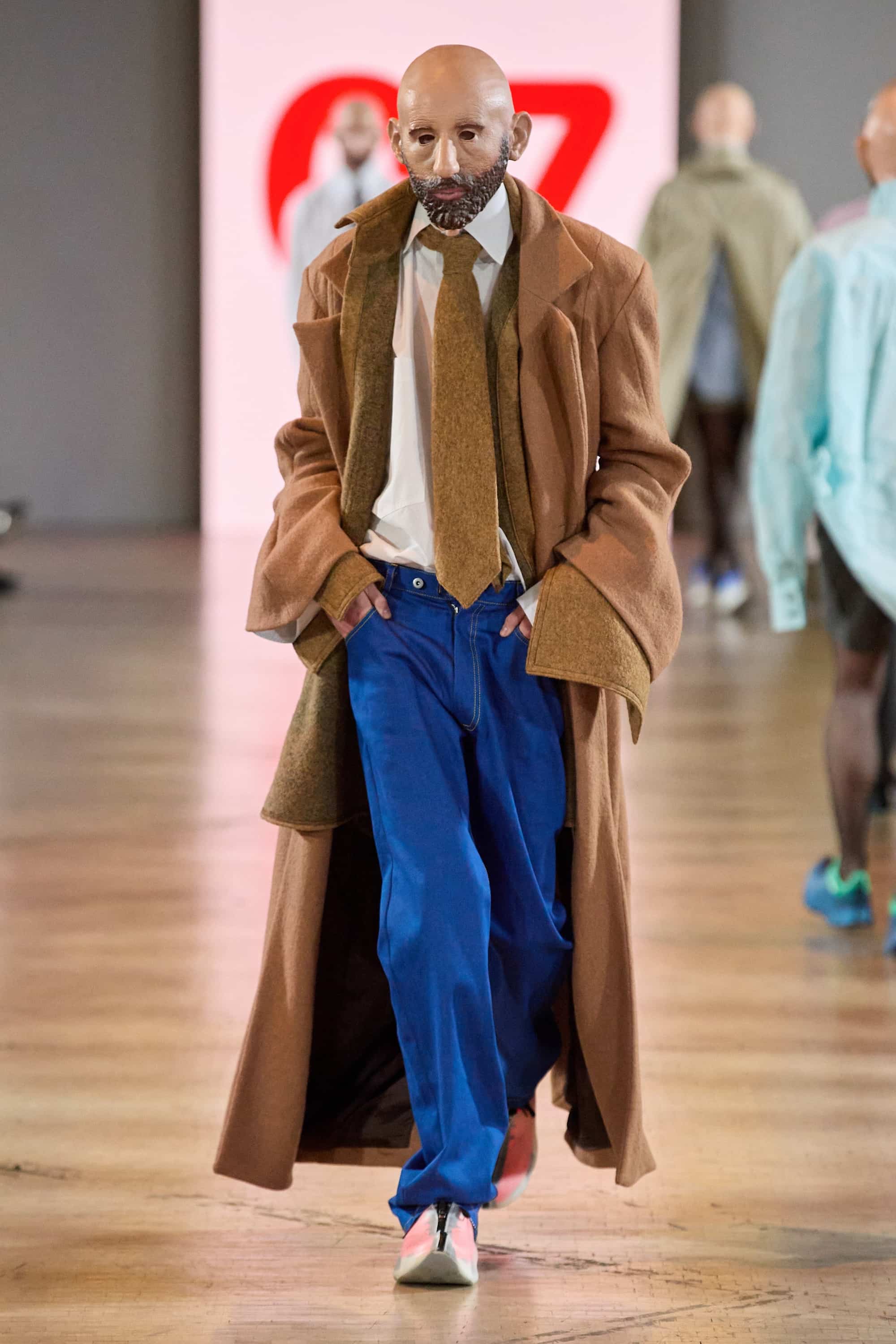
Your clothes often feel like characters more than outfits. Do you write narratives or personae as part of your design process? Writing narratives was a significant part of my BA, less so for the MA. Building a character helps me visualise a collection—who would wear this, where do they live, what do they smell like? Playing on dominant and submissive roles helps inform my design process, and my Big Daddy Jonny alter-ego has become something of a muse to me. Identity and world-building are ideas drilled into you early on during the MA at Saint Martins.
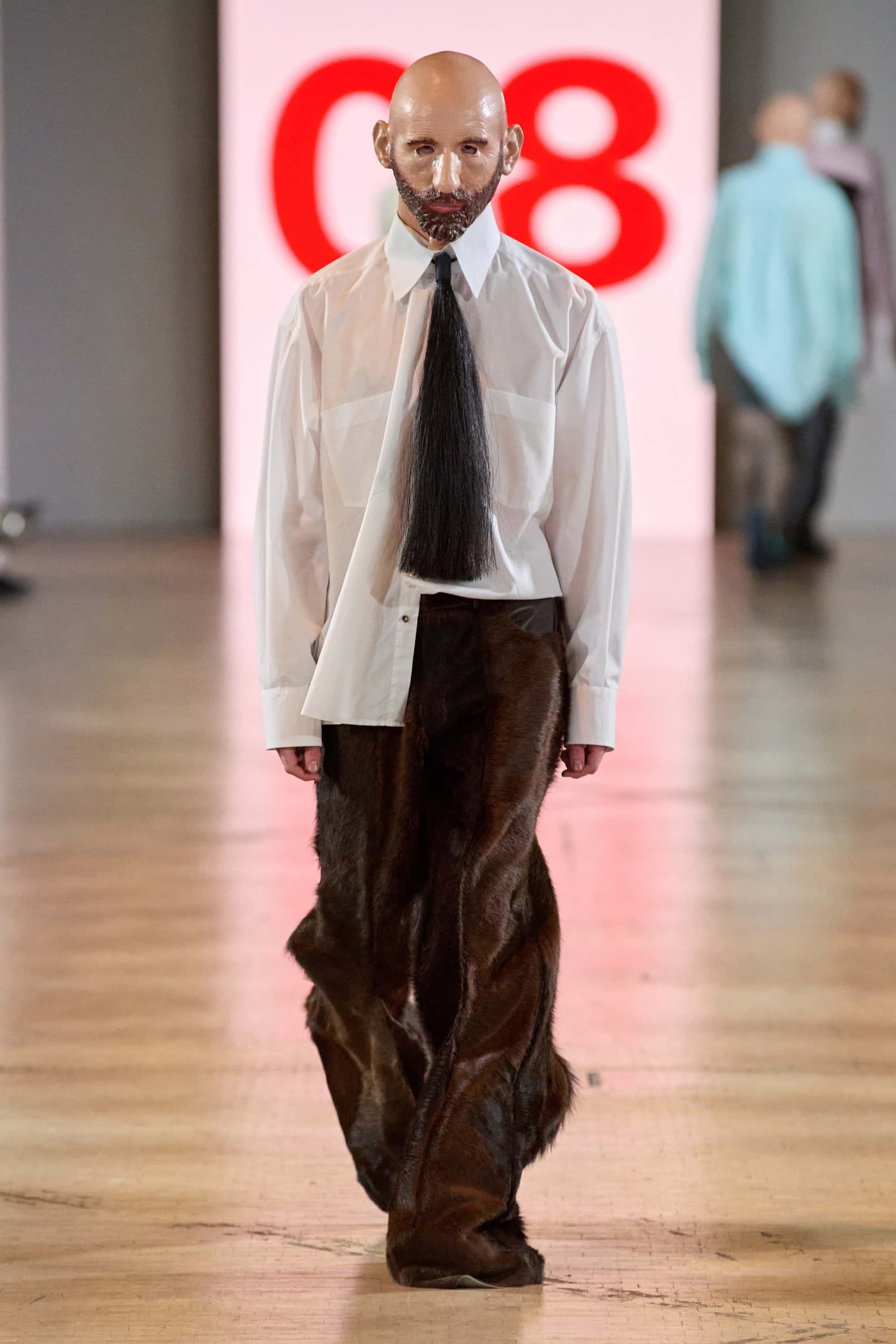
There’s a tension in your silhouettes between power and disempowerment. What are you trying to say about the male body, or authority, through these choices? I’m interested in the performance of masculinity—how it’s supposed to look versus how it actually feels. There’s a tension between control and freedom. Shirts were oversized like mini A-line dresses, but collars were fused stiff so you had to hold your head a certain way. A lot of my work is about men trying to hold themselves together, having composure, being impenetrable. But I’m more interested in when that starts to fall apart. The silhouettes are a kind of armour—but one that’s slipping.

Can you give us any insight into what you’re working on right now? What’s next for you and the brand? I’m developing a new collection I hope to launch later this year, and I’m in the early stages of a commercial collaboration with The North Face on a shoe range. I also relaunched the brand I run with one of my best friends—New Future Horizon. We’ve realigned our identity with core values: engineering, innovation, and progression. The first drop is available now exclusively on our website.

Team Credits

Styling Credits

No items found.

Power Play: In Conversation with JOHNATHAN JAMES WILLIAM

Power Play: In Conversation with JOHNATHAN JAMES WILLIAM

Art
Fashion
Music

Contributors

Photography by

Words by

Team Credits

Styling Credits

No items found.

In an industry drunk on nostalgia and novelty, menswear designer Jonathan James William cuts through with something braver—and more incisive. A Central Saint Martins graduate with the instincts of a provocateur-in-the-making, his work exists somewhere between the shady psychodrama of Helmut Lang and the industrial precision of Kiko Kostadinov. Blending BDSM iconography with capitalist dread, his silhouettes sag, stiffen and seduce in equal measure. But beneath the dystopian tailoring and corporate masks lies a more potent inquiry—into masculinity, sexuality, labour and control. Step inside the panopticular world of Jonathan James William, where power dresses up, breaks down, and begs to be seen.

“Social commentary is integral to the world I am building for Jonathan James William. I don’t use it to preach, but more in the sense that fashion should reflect the times we live in.”

I would love to hear the story of your journey towards fashion and design. What inspired you to become a designer, and what continues to inspire your work today? For as long as I can remember I was always a creative child, whether that was making some form of art or designing football kits. Throughout high school that developed into a whole range of different design disciplines, from tattoo artist to architect to automotive designer, then eventually fashion design was the one that stuck. I remember a precise moment when my aunt received the seasonal Louis Vuitton menswear catalogue by accident, and it just happened to be Kim Jones’ debut collection for the house, inspired by African fashion. I was shocked to learn that this is what fashion could be like: very real, desirable clothes. I’ve wanted to do nothing but fashion since. Several themes consistently inspire my work: mundane office life, the underground techno scene, architecture, mid-twentieth century art and furniture, the world of BDSM. I am also very much a visual person, so film continues to inspire a lot of my work too.

You recently graduated from Central Saint Martins’ prestigious MA program in Menswear. How did you find the experience studying there—did it live up to the high standards? It was always my dream to pursue an MA at Central Saint Martins, and for me personally it did more than live up to its high standards. The workload and long hours in the studio from open til close were relentless, but I loved my time there and it definitely helped evolve me into the designer I am today.

“A lot of my work is about men trying to hold themselves together, having composure, being impenetrable. But I’m more interested in when that starts to fall apart.”

Your label JONATHAN JAMES WILLIAM has emerged as something of a troublemaker in the British fashion landscape. Is social commentary a facet of your work, or what is it that you’re looking to communicate? Social commentary is integral to the world I am building for Jonathan James William. I don’t use it to preach, but more in the sense that fashion should reflect the times we live in. I want to push the viewer to think for themselves and come to their own conclusion regarding my body of work. My MA collection was based around the idea of feeling suffocated—suppressed by your job and by society. I wanted to challenge masculinity and question stereotypical dominance and submission, and ask: What does it mean to dress for power when you’re no longer the one in control?

In terms of inspirations, references to Balenciaga, Martine Rose and even some Kiko Kostadinov come to mind in your work. Are these designers that have inspired your practice? Cristobal Balenciaga I hold to the highest esteem—not purely in aesthetic but in how he saw his work as an ever-evolving continuum. Martine Rose and Kiko Kostadinov are for sure an inspiration, and along with a few other designers based in London, they’re the only ones that excite me. Their determination and work ethic are extremely profound and influential to me not only as a designer, but as a person.

“My work is an evolution from the previous collection—what worked, what didn’t, what needs refining and what should be scrapped.”

Could you walk us through your design process from conceptualisation to creation? My work is an evolution from the previous collection—what worked, what didn’t, what needs refining and what should be scrapped. This idea stems from my ancestor, Charles Darwin. I’m obsessed with how we as humans have evolved, how animals have evolved, and how clothing will continue to evolve too. My process begins with research, which I organise into folders and files—ironically like working in an office. I prefer a technical, mathematical approach: pattern cutting, making and editing toiles, exploring fabrics and colour stories. Sometimes it takes years for the right idea to find its time.

Your clothes often feel like characters more than outfits. Do you write narratives or personae as part of your design process? Writing narratives was a significant part of my BA, less so for the MA. Building a character helps me visualise a collection—who would wear this, where do they live, what do they smell like? Playing on dominant and submissive roles helps inform my design process, and my Big Daddy Jonny alter-ego has become something of a muse to me. Identity and world-building are ideas drilled into you early on during the MA at Saint Martins.

There’s a tension in your silhouettes between power and disempowerment. What are you trying to say about the male body, or authority, through these choices? I’m interested in the performance of masculinity—how it’s supposed to look versus how it actually feels. There’s a tension between control and freedom. Shirts were oversized like mini A-line dresses, but collars were fused stiff so you had to hold your head a certain way. A lot of my work is about men trying to hold themselves together, having composure, being impenetrable. But I’m more interested in when that starts to fall apart. The silhouettes are a kind of armour—but one that’s slipping.

Can you give us any insight into what you’re working on right now? What’s next for you and the brand? I’m developing a new collection I hope to launch later this year, and I’m in the early stages of a commercial collaboration with The North Face on a shoe range. I also relaunched the brand I run with one of my best friends—New Future Horizon. We’ve realigned our identity with core values: engineering, innovation, and progression. The first drop is available now exclusively on our website.