1. You often use materials like synthetic hair and latex that mimic skin. How do these textures relate to your wider ideas?
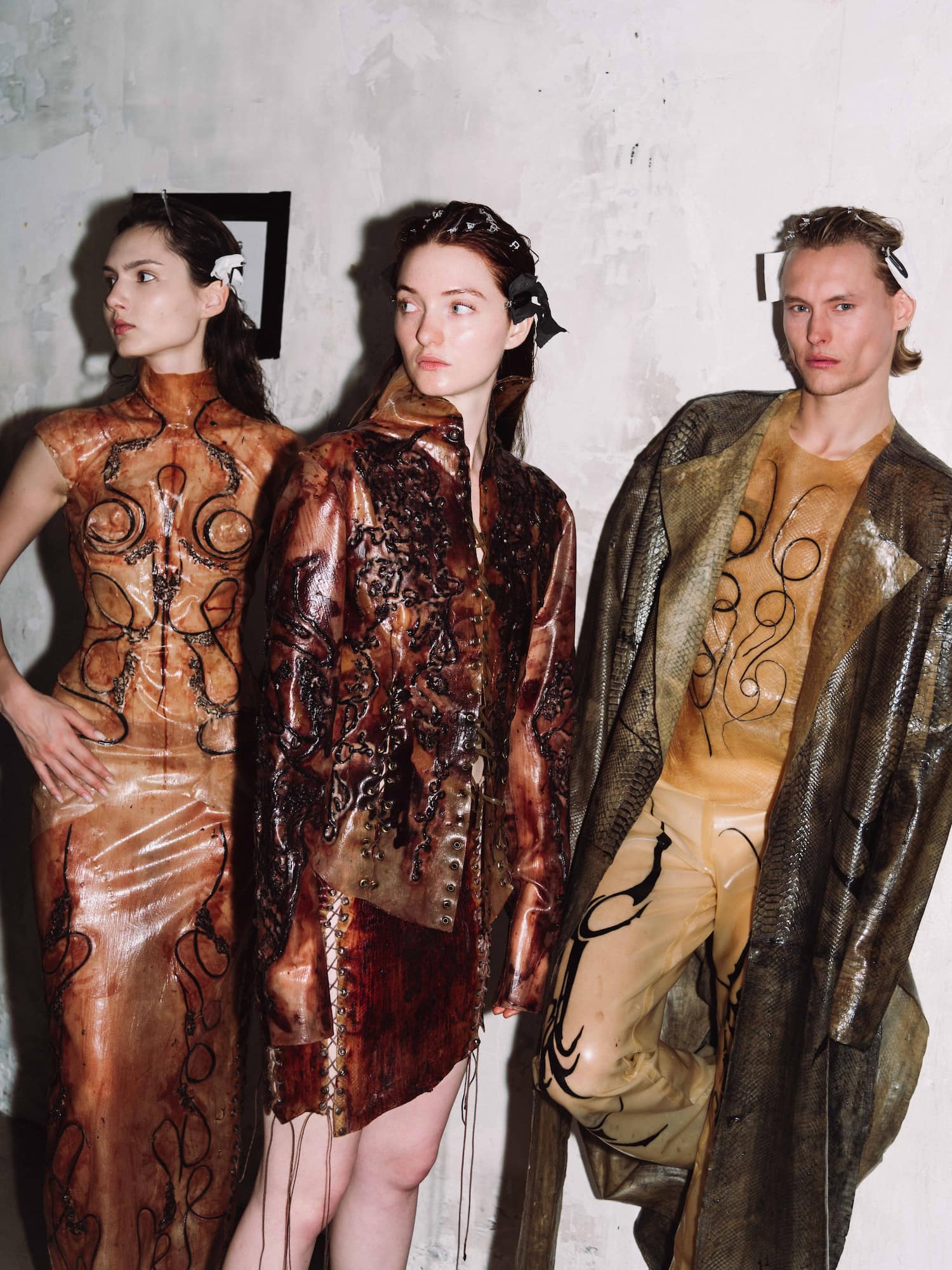
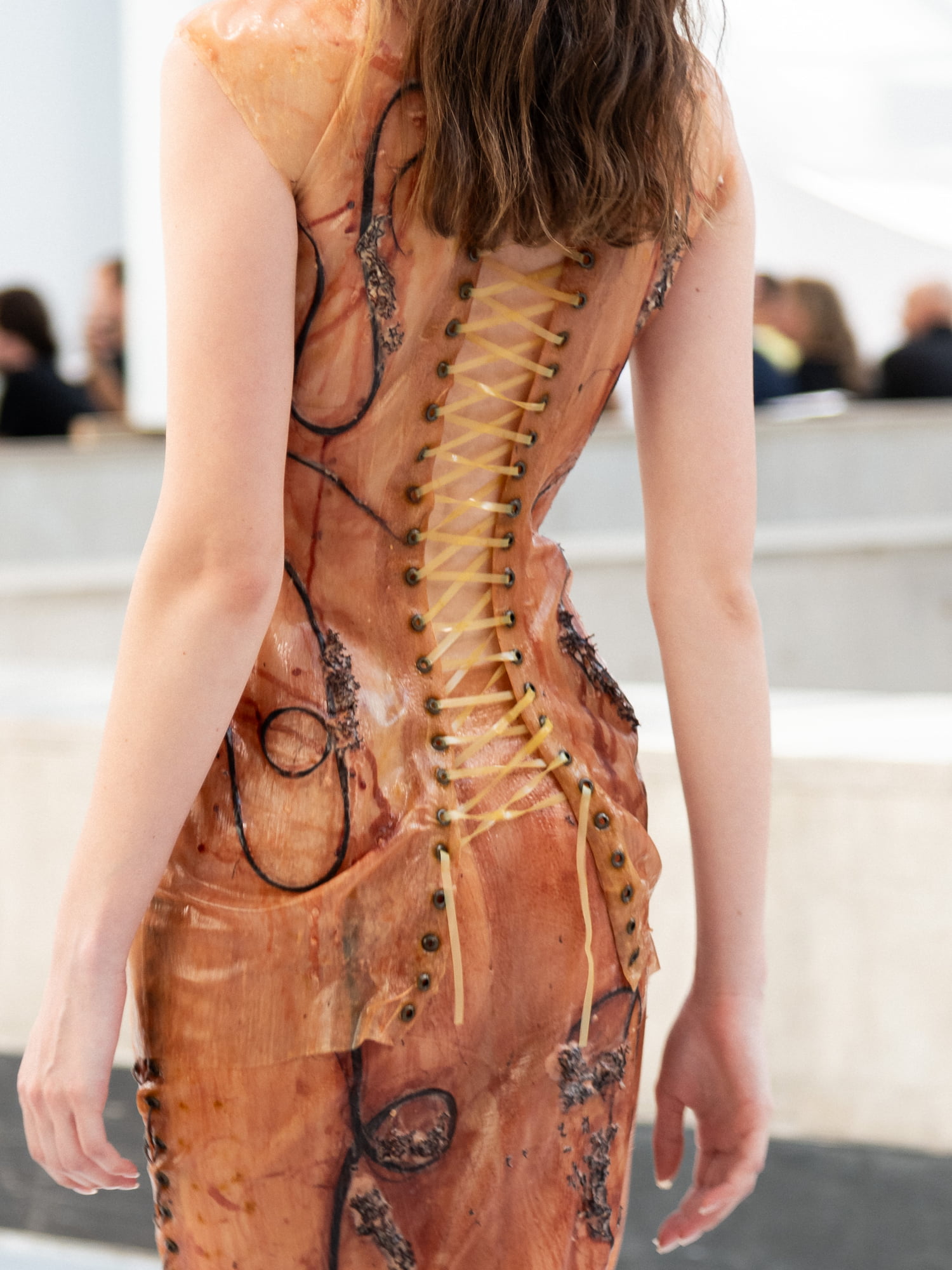
Materials play a fundamental role in the construction of each collection. I am consistently drawn to experimenting with texture and surface, particularly with elements such as synthetic hair and latex that evoke an unexpected or slightly uncanny sensation. Prior to my degree, I completed a foundation course in textile design, which significantly influenced my approach to fabric and materiality. Latex, for instance, was a material I had previously experimented with on a limited scale but never fully explored. This collection provided an opportunity to immerse myself in its potential and challenge the boundaries of its use.
2. What do you think your work reveals about your perspective or personality as a designer?
I believe my work reflects a combination of my personal perspective and my approach to design, with a particular emphasis on my personal perspective. I do not tend to meticulously plan every detail; rather, I begin with a conceptual framework and develop ideas organically through experimentation. My aesthetic occupies a space defined by brutal romanticism, creating a deliberate tension within my pieces. This duality mirrors my general mindset, curious, open-minded, and unconcerned with achieving perfection from the outset.
3. Who or what are the main influences behind your work?
I draw significant inspiration from designers such as John Galliano, Alexander McQueen, and Especially Dilara Fındıkoğlu. Their work embodies storytelling through fashion, transcending conventional notions of wearability and commercial appeal. They have encouraged me to view fashion as a visual language, a medium for conveying meaning rather than simply producing aesthetically pleasing garments. Beyond these designers, I find that everything around me influences my work, anything that captures my interest or feels compelling. I’m constantly absorbing ideas from a wide range of sources, whether it be art, nature, culture, or everyday experiences.
4. You reference anatomy and natural forms throughout your designs. What does that represent for you?
This collection was deeply influenced by the concept of “Memento Mori” , the philosophical reminder of mortality. I aimed to explore themes of identity preservation, akin to capturing a transient moment in perpetuity. Latex, with its skin-like texture and ability to retain form, became a fitting material to express this eerie, lifelike quality. Incorporating anatomical lines reinforced the sensation of a ‘second skin,’ imbuing the garments with a subtle uncanny effect.
5. What are your next steps, or what would you like to explore?
Moving forward, I am committed to continual experimentation and pushing creative boundaries. I have no interest in complacency or playing it safe. There remains a vast array of materials, references, and techniques I am eager to investigate. Embracing discomfort is crucial in my process, as it often leads to the most compelling and innovative outcomes.