Russian-born artist, Maria, burst onto the London art scene five years ago with a raw, unapologetic energy that quickly set her apart. As her own life unraveled through a turbulent chapter, so too did her practice. She found herself retreating inward, confronting a sense of isolation so raw it felt physical—as though she’d become part of the decor: silent, static, ornamental.
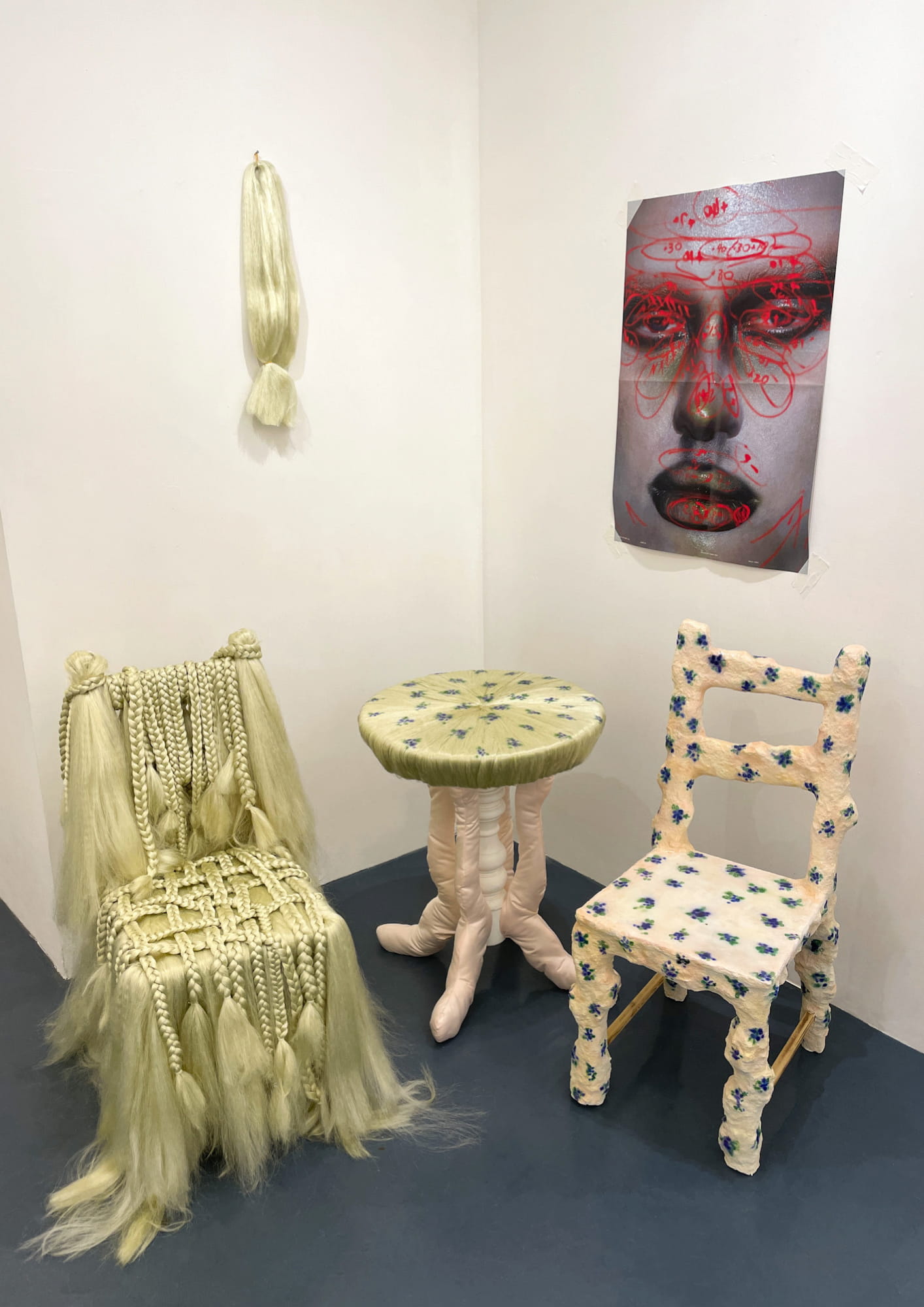
Her response? Sculptural work that defied that stillness. Bold, unflinching, and deeply personal, her pieces began to reflect a sharp turn in perspective—a reclamation. Her materials spoke not only to the feminine experience but to the rejection of its stereotypes. No more shrinking into domestic fairytales. No more making space for patriarchal illusions of beauty or worth. Maria’s art today is a striking contrast: soft forms with hard truths, seductive textures that carry weight. Her sculptures channel feminist resistance, demanding space and presence in a world that so often edits women out. For her, it’s not just about making art—it’s about making statements. Loud ones.
Misconceptions
Maria says her work is often met with misconceptions. “It’s not that people misunderstand it exactly,” she explains. “It’s more that they either don’t get it at all—or they feel it instinctively. Especially women. My work often deals with objectification, and I think many women recognise something in it without needing to read an explanation. They’ve lived it.”
Early inspiration
Fashion was Maria’s first language of self-expression. Long before sculpture, she immersed herself in the world of style, not just wearing clothes but shaping how they were seen, through her social media. She spent years collaborating with global fashion houses, building meaningful relationships while curating a presence that stood out in an oversaturated world. Her style resonated widely. In time, she realised she wasn’t just a canvas—she was the inspiration. Maria became her own muse, and the next natural step was to create something lasting.

Current life moves
After carving out her voice in London, Maria has made the bold decision to move to Madrid, seeking fresh inspiration and a new rhythm of life. Now on a creative hiatus in Bangkok, Thailand, she is taking time to reflect, recharge, and explore new artistic influences. Immersing herself in the city’s vibrant culture, she’s also researching art schools that align with her evolving vision. This pause isn’t a departure from her practice—it’s a recalibration. Maria is preparing to return to sculpture with renewed purpose and passion, ready to push the boundaries of her work in ways that are even more personal and profound.
Environment
When Maria arrived in Thailand, she quickly realised how much she craves comfort and heat—especially through clothing. She found herself only wanting to wear natural fabrics and simple silhouettes that could be worn day or night, dressed up or down depending on the accessories. That experience shaped her decision to create a strong base wardrobe: timeless, elegant, and breathable. The environment doesn’t only influence her aesthetics—it shifts what feels necessary, what she wants to live in.
Keeping Connected
Staying connected to creativity is something that shifts over time for Maria. She usually turns to a mix of creative outlets to stay in the flow—whatever that happens to look like at the time. She explains that only around 30% of her work is “creative”; the rest is logistics, self-presentation, social media, and organising the actual production and sales. For example, if she wants to sell a one-off piece like the Monster chair—which doesn’t even exist in stock anymore—she needs to know everything: the material specs, the curing time for epoxy, cost breakdowns, which shipping company to use, which crating service won’t damage it, how to get the exact fabric that was only available in London—it’s a whole system. Creativity isn’t just the spark—“you need a lot more to actually keep the fire going.”
.jpg)
Different Mediums
Textiles are set to play a major role in Maria’s upcoming work. She’s used the medium before, but says there’s still so much left to explore. She’s also drawn to materials like glass and metal—both offering their own challenges and possibilities. During her time in London, she began experimenting with ceramics and continues to develop a small body of yet-to-finish pieces. Though that work has never been shown publicly, she hasn’t ruled out returning to it. “I’d love to pick it up again,” she says.
What’s next in store?
Maria is in the early stages of building her fashion brand—and her vision extends far beyond the runway. The brand embodies an effortlessly cool-girl aesthetic: a little undone, always intentional. Think elevated essentials that balance comfort with edge, versatility with impact. Clothes made for the in-between moments in life—the stretch between the supermarket run to impromptu nights out. A wardrobe for women who do a lot, and want to look good doing it.
